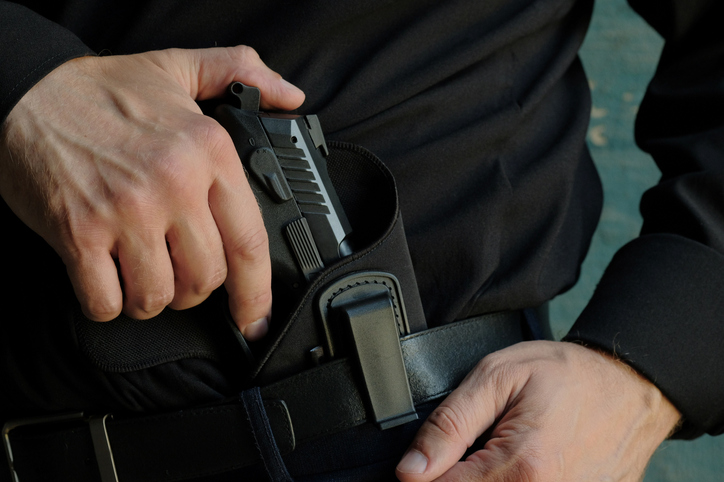
Gun ownership is widespread in Texas, but that does not mean the law is lenient when a situation crosses into unlawful possession. San Antonio routinely sees arrests involving firearms—often during traffic stops, domestic disturbances, bar incidents, or routine warrant checks. Once a weapon appears in the picture, prosecutors tend to pursue charges aggressively, and defendants quickly discover that Texas firearm laws are far more complex than they assumed.
When Gun Possession Becomes Illegal in Texas
Texas allows lawful adults to carry handguns without a permit, but there are clear boundaries that trigger criminal liability. The primary statutes fall under Texas Penal Code Chapter 46, which outlines weapons restrictions, prohibited persons, and unlawful carry rules.
Some of the most common scenarios include:
Possession by a Prohibited Person
Individuals with a felony conviction, certain domestic violence convictions, or active protective orders are barred from possessing a firearm. The Bureau of Alcohol, Tobacco, Firearms and Explosives (ATF) provides federal guidance on who qualifies as a prohibited person. Even accidental violations can lead to felony charges.
Possession in a Prohibited Location
Firearms are banned in specific locations under Texas Penal Code §46.03, including:
- Schools and school activities
- Polling places during elections
- Airports beyond security
- Courthouses
- Bars and certain businesses deriving 51%+ revenue from alcohol
Violating these restrictions almost always results in arrest—even if the firearm is legally owned.
Unlawful Carrying of a Weapon (UCW)
UCW charges arise when a weapon is carried while intoxicated or transported improperly. Texas DPS explains general carry rules under Permitless Carry / Constitutional Carry, but nuances in real-world encounters often create legal complications.
Federal Charges
The U.S. Department of Justice may intervene if the gun possession involves interstate elements, immigration issues, or violent-crime allegations—leading to harsher federal sentencing guidelines.
What Prosecutors Must Prove
To secure a conviction, the State must show:
- Knowing possession
- Control or access to where the gun was found
- The defendant falls into a prohibited category or was carrying in a prohibited place
Case law from Texas Court of Criminal Appeals demonstrates that proving “knowing possession” can be difficult, especially when multiple individuals are involved.
Because San Antonio patrol officers frequently conduct firearm-related searches during roadside stops, Fourth Amendment issues appear often in Bexar County criminal courts.
Defenses That Often Apply in San Antonio Gun Possession Cases
Defense strategies typically challenge both the arrest circumstances and the legal foundation of the charge. Common defenses include:
Illegal Search and Seizure
Under the Fourth Amendment, evidence obtained without legal justification may be suppressed. San Antonio’s high volume of pretextual traffic stops makes this issue especially relevant.
Lack of Possession or Knowledge
A firearm found in a shared residence or jointly occupied vehicle does not automatically establish possession. The State must prove intentional control.
Misunderstanding of Firearm Rights
Many Texans misunderstand the restoration of firearm rights after a felony or family-violence conviction. The Texas Office of Court Administration publishes guidance on record restrictions, but individual circumstances vary.
Improper Location Allegations
If signage required under Texas Alcoholic Beverage Commission regulations is missing or incorrect, prosecutors may struggle to prove a violation of §46.03.
Why These Charges Carry Serious Long-Term Consequences
Even a misdemeanor firearm conviction can harm employment prospects, security clearances, and future rights. Felony convictions are especially severe—creating long-term barriers documented by the National Institute of Justice regarding reentry and collateral consequences.
Texas may be gun-friendly, but Bexar County prosecutors and judges do not hesitate to impose strict penalties when a weapon is involved.
The Importance of Experienced Legal Representation
Gun possession charges involve constitutional analysis, evidentiary disputes, firearm statutes, and personal history evaluation. A qualified defense attorney can determine:
- Whether police acted lawfully
- Whether the alleged possession can be disproven
- Whether diversion or dismissal options exist
- Whether firearm rights were correctly interpreted
Early legal intervention is often the deciding factor in achieving a favorable resolution.
For those facing firearm-related charges, speaking with an experienced san antonio gun possession attorney can make the difference between a life-altering conviction and a protected future.