In September 2025, a California judge dismissed a civil lawsuit with prejudice after discovering that the plaintiffs had submitted deepfake videos as authentic witness testimony. The case — Mendones v. Cushman & Wakefield in Alameda County Superior Court — appeared to be the first in the United States where a court imposed a terminating sanction specifically because of AI-fabricated evidence. The plaintiffs’ case was erased entirely. The court didn’t impose fines or exclude the offending exhibits. It ended the litigation.
That ruling sent a message the legal profession had been waiting for. But it also exposed a far more complex reality underneath the clean headline: courts are only beginning to develop the doctrinal tools, evidentiary rules, and professional responsibility frameworks needed to deal with deepfakes. The technology is arriving faster than the law can govern it. And what courts are “starting to say” about deepfakes spans at least five distinct legal categories — evidence, criminal law, civil liability, platform responsibility, and professional ethics — each developing at a different pace and in a different direction.
Key Takeaways
- In September 2025, a California court became the first in the U.S. to impose a terminating sanction — case dismissal with prejudice — after discovering the plaintiffs had submitted AI-fabricated witness testimony videos in Mendones v. Cushman & Wakefield.
- Human observers can identify high-quality deepfakes only 24.5% of the time — statistically worse than flipping a coin — meaning the courtroom assumption that judges and jurors can reliably detect fabricated video no longer holds.
- The TAKE IT DOWN Act, signed into law May 19, 2025, became the first federal statute directly targeting deepfakes, criminalizing nonconsensual intimate deepfakes with penalties up to three years in prison, and requiring online platforms to implement takedown systems by May 19, 2026. The first conviction under the Act was issued in April 2026.
- Proposed Federal Rule of Evidence 707, released for public comment in August 2025, would subject machine-generated evidence to expert-witness reliability standards — but critics note it applies only to evidence the proponent acknowledges as AI-generated, leaving disputed deepfakes largely unaddressed.
- Deepfake files increased from 500,000 in 2023 to an estimated eight million in 2025 — a 1,500% growth rate — and discrete deepfake incidents tracked by one monitoring company rose from 42 in 2023 to 2,031 in the third quarter of 2025 alone.
- About 47 states had enacted some form of deepfake-related legislation by mid-2025, but the coverage is uneven — definitions vary, penalties range from misdemeanor to 30-year felony (Louisiana), and the patchwork creates significant jurisdictional uncertainty for both victims and defendants.
The Evidence Problem: Can Courts Trust What They See?
The foundational assumption underlying video, audio, and photographic evidence is that a recording reflects something that actually happened. That assumption is now structurally compromised.
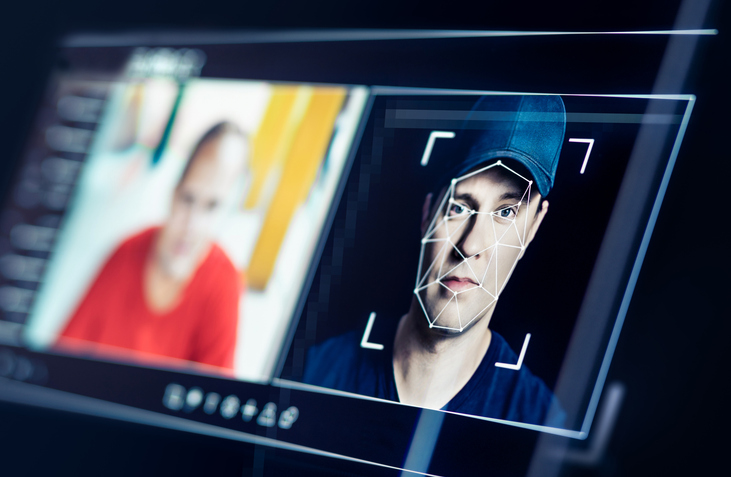
University at Buffalo professor Siwei Lyu, a leading deepfake researcher, reports that voice cloning has crossed what he calls an “indistinguishable threshold” — where a few seconds of audio can produce a convincing clone complete with natural intonation, pauses, and breathing. For video, the numbers are just as stark: human observers can identify high-quality deepfakes only 24.5% of the time. That is meaningfully worse than random guessing. It means that when a piece of deepfaked video evidence reaches a jury, neither the jurors nor — unless a forensic expert is present — the attorneys or judge have a reliable mechanism to detect the problem.
This matters enormously for categories of evidence that have historically been treated as among the most objective available. Dashcam footage. Surveillance video. Security recordings. AI tools can seamlessly alter timestamps, license plates, vehicle positions, weather conditions, and the identities of individuals in such recordings. In a documented European case, diffusion models were used to inject artificial scratches and cracks into photographs of vehicle bumpers to support a fabricated insurance fraud claim. The manipulation was undetectable to the naked eye. What had been considered ironclad physical documentation of damage was entirely synthetic.
The Mendones case illustrated what courts are already facing. Judge Victoria Kolakowski noticed the witness testimony felt wrong — nearly motionless facial expressions, strange cuts, repeated mannerisms — and called it out. Her court imposed the most severe sanction available: the case was dismissed with prejudice under California Code of Civil Procedure § 128.7, which requires parties to certify that their submissions have evidentiary support and are not presented for improper purposes. The judge concluded that monetary penalties or evidentiary exclusions were insufficient. Only termination of the litigation sent the appropriate message about zero tolerance for AI-fabricated evidence.
What saved that court was an alert judge. There is no reliable systematic process for detecting deepfaked evidence. Detection algorithms themselves are unreliable and biased. And the volume problem is accelerating — deepfake incidents tracked by a single monitoring company rose from 179 in the first quarter of 2025 to 2,031 in the third quarter. At that pace, the legal system’s manual, intuition-based approach to authentication is going to fail in cases where no one has the specific expertise to catch it.
The Federal Rulemaking Response: Rule 707 and Its Gap
The formal legal response to the deepfake evidence problem at the federal level is proposed Rule of Evidence 707, which the Judicial Conference’s Advisory Committee released for public comment in August 2025 and which remains under active consideration.
Rule 707 would apply the Daubert reliability framework — currently used for expert witness testimony — to machine-generated evidence, requiring the proponent of AI-generated material to demonstrate its reliability before the court admits it. The rule reflects a considered judgment that AI-generated evidence presents reliability questions similar to those raised by expert opinion, and that the same structured analysis should apply.
The critical limitation has been identified clearly by legal scholars: Rule 707 applies only to evidence that the proponent acknowledges was created by AI. A party who submits a fabricated video as authentic evidence is not going to announce that the video was AI-generated. Rule 707’s reliability framework does nothing to address the core scenario — disputed deepfakes submitted as genuine — that represents the most serious threat to judicial fact-finding.
The Advisory Committee had separately considered amending Rule 901 — the authentication rule — to create a specialized process for challenging potentially deepfaked evidence. Under the proposed Rule 901(c), if a party raised a credible challenge to evidence as AI-fabricated, the burden would shift to the proponent to demonstrate authenticity by a preponderance of the evidence. The committee declined to move forward with Rule 901(c), with several members observing that courts have historically adapted to technological change without new rules and that the number of real-world deepfake cases was still limited.
Louisiana declined to wait for federal consensus. Its August 2025 framework — the first statewide law specifically addressing AI-generated evidence — requires attorneys to exercise reasonable diligence in verifying the authenticity of evidence before submitting it. That professional responsibility standard shifts the evidentiary burden onto counsel, creating malpractice exposure and disciplinary risk for attorneys who introduce deepfaked material without adequate verification, whether they knew it was fabricated or not.
The TAKE IT DOWN Act: The First Federal Deepfake Statute
Outside the evidentiary context, the most significant legal development of 2025 for deepfakes was the TAKE IT DOWN Act, signed into law on May 19, 2025.
The statute was Congress’s first direct engagement with deepfakes as a substantive area of federal criminal law. It criminalizes the knowing publication of nonconsensual intimate imagery — both authentic images shared without consent and AI-generated “digital forgeries” depicting someone in an intimate situation they never participated in. Penalties run up to two years in prison when the victim is an adult and up to three years when the victim is a minor. Threatening to publish such material carries separate penalties.
The platform obligations are equally significant. By May 19, 2026, any website or application primarily hosting user-generated content must have a notice-and-removal system allowing victims to request takedown of nonconsensual intimate imagery. Upon receiving a valid notice, platforms have 48 hours to investigate and remove the content, and must make reasonable efforts to eliminate duplicate copies. The FTC has enforcement authority for platform non-compliance.
The first conviction under the Act was issued in April 2026 — an Ohio man who had used AI to create deepfake pornographic material involving both adults and children in his community, distributing it to victims’ coworkers and posting it to child sexual abuse material websites. He pleaded guilty to multiple cybercrimes including publication of digital forgeries. In a separate and disturbing parallel development, a Pennsylvania State Police corporal pleaded guilty to making thousands of deepfake pornographic images of multiple women using images from law enforcement databases — including mug shots and driver’s license photos — with sentencing scheduled for July 2026.
The TAKE IT DOWN Act does not provide a federal civil remedy for victims. That gap is what the DEFIANCE Act (Disrupt Explicit Forged Images and Non-Consensual Edits Act) is designed to fill. It passed the Senate unanimously in January 2026 and would establish a federal right of action allowing victims of nonconsensual intimate deepfakes to sue creators, distributors, and those who knowingly host such content, with statutory damages up to $150,000 — or $250,000 when the deepfake is connected to sexual assault, stalking, or harassment. As of mid-2026, the DEFIANCE Act awaits House action.
The State Law Patchwork: 47 Jurisdictions, 47 Different Answers
The federal legislative response has been targeted and sector-specific. The broader deepfake legal landscape is being shaped primarily by state law — and that landscape is a patchwork of considerable complexity.
By mid-2025, approximately 47 states had enacted some form of deepfake-related legislation, but the coverage varies dramatically by category, definition, and penalty structure. Three principal areas have attracted the most legislative attention: nonconsensual intimate imagery, political deepfakes, and digital identity protection.
On intimate imagery, states have moved fastest, with roughly 27 states having enacted laws specifically targeting sexual deepfakes, according to ComplianceHub data. The penalties range from misdemeanor treatment in some states to Louisiana’s provisions carrying up to 30 years in prison for certain offenses. Pennsylvania’s 2025 Act 35 criminalizes creating or distributing deepfakes with fraudulent or injurious intent as a first-degree misdemeanor or third-degree felony depending on severity, while carving out satire and including an affirmative defense for content with prominent disclaimers. In March 2026, two Pennsylvania teenagers received felony adjudications for creating nearly 350 deepfake images of 60 female classmates.
On political deepfakes, approximately 28 states have laws targeting deepfakes in election contexts. Texas’s Election Code § 255.004 makes it a Class A misdemeanor to distribute manipulated video or audio that harms a political candidate within 30 days of an election. Several California election-related deepfake laws faced legal challenges from technology companies, with a federal judge striking down one provision in August 2025 on Section 230 and First Amendment grounds — illustrating the constitutional friction that political deepfake regulation creates when it reaches the platform liability question.
On digital identity, New York’s deepfake statute extends right of publicity laws to cover synthetic media and includes posthumous protection, allowing estates to sue on behalf of deceased individuals whose likeness is used without authorization. Tennessee’s ELVIS Act (named for the obvious reason) establishes civil remedies for unauthorized voice or likeness replication in AI-generated content — a direct response to the music industry’s alarm at AI-generated songs using deceased artists’ voices.
The NO FAKES Act, pending in Congress, would create a federal right to control digital replicas of one’s voice and visual likeness — which would nationalize a protection currently available only in states that have moved forward on their own.
The “Deepfake Defense” Problem
An emerging and troubling legal dynamic is the inverse of fake evidence: the use of deepfake concerns to challenge authentic evidence. The argument takes the form of “this could be a deepfake” being raised defensively against video recordings that are, in fact, genuine.
The Tesla litigation provided an early example. In a case where a plaintiff sought to hold Tesla liable for Elon Musk’s statements about the safety of its Autopilot feature, Tesla argued that Musk’s public figure status made him the target of many deepfake attempts and therefore it could neither confirm nor deny the authenticity of the video. The court rejected this argument, declining to set a precedent that defendants could use deepfake uncertainty as a blanket shield against liability for recorded statements. But the argument was made, and courts can expect to see more of it.
In United States v. Khalilian, defense counsel moved to exclude voice recordings on grounds they could be deepfaked. When prosecutors argued that witness familiarity with the defendant’s voice was sufficient to authenticate the recording, the court responded that this was “probably enough to get it in” — a standard that legal scholars have described as likely insufficient for deepfake authentication claims.
And in Wisconsin v. Rittenhouse, the defense challenged prosecution efforts to zoom iPad video evidence, arguing that Apple’s pinch-to-zoom function uses AI algorithms that could alter footage. The court required expert testimony that the zoom function would not alter the underlying video — testimony the prosecution could not produce on short notice, which briefly threatened the admissibility of otherwise legitimate evidence.
This dynamic creates a structural problem that legal scholars have called the “liar’s dividend” — the ability of bad actors to escape accountability for genuine statements by raising plausible-sounding deepfake doubt. Research shows that even when jurors understand that contested audiovisual evidence may be or is likely fake, the deepfake can nonetheless dramatically alter their perceptions — undermining the integrity of deliberations even when the judge instructs the jury to treat the evidence as authentic.
Professional Responsibility: What Attorneys Must Do Now
The deepfake problem is not only a question of what courts will do with deepfaked evidence when they encounter it. It is also a question of what attorneys are affirmatively required to do before submitting digital evidence of any kind.
ABA Model Rule 1.1, Comment 8 requires lawyers to understand the risks and benefits of relevant technology — a broad standard that increasingly encompasses the obligation to verify the authenticity of digital evidence. Model Rule 3.3 prohibits knowingly offering false evidence. Some commentators have proposed that “knowingly” should be expanded to “knew or should have known” in the context of digital evidence — essentially creating an affirmative duty to take reasonable verification steps before submitting video, audio, or photographic exhibits.
Louisiana’s attorney verification framework has made that obligation explicit for state proceedings. Courts nationally are beginning to require parties to certify that AI was not used to fabricate submitted materials — paralleling the existing requirements in some courts that filings disclose whether AI was used in drafting pleadings.
Practically, this means that attorneys handling cases involving digital evidence face a growing pre-trial obligation to preserve and authenticate that evidence through reliable chains of custody. Discovery requests are being tailored to include requests for AI-generated materials. Expert witnesses on digital forensics are becoming routine in cases where significant video or audio evidence is contested. And the cost of that forensic verification — as the Quinn Emanuel analysis noted — will likely add substantial expense to any case where evidence authenticity is disputed.
Where the Law Is Going
The legal landscape for deepfakes is in rapid, simultaneous development across multiple tracks. The evidentiary rules governing what courts will accept, the criminal statutes governing who goes to prison for creating or distributing deepfakes, the civil remedies available to victims, the platform obligations for removing deepfake content, and the professional responsibility standards governing attorney conduct are all being written, rewritten, and tested in real cases in real courts right now.
What courts are starting to say can be summarized in a few emerging principles:
Fabricating evidence using deepfakes will be treated as among the most serious misconduct available — terminating sanctions, not merely monetary penalties. The Mendones dismissal established that the judicial response to deliberate AI fabrication will be categorical, not incremental.
The “deepfake defense” will be controlled, not accommodated. Courts are resisting the argument that deepfake possibility creates blanket authentication uncertainty that can excuse liability for recorded statements.
Platform obligations are real and enforceable. The TAKE IT DOWN Act’s 48-hour removal requirement, effective in May 2026, creates the first federal timeline that courts and the FTC can enforce against non-compliant platforms.
Criminal enforcement is active and escalating. The April 2026 conviction under the TAKE IT DOWN Act — within less than a year of the statute’s enactment — signals that federal prosecution of deepfake-related crimes will be a priority, not a theoretical threat.
The architecture is still incomplete. Federal civil remedies for victims outside the intimate imagery context don’t exist yet. Political deepfake regulation faces First Amendment challenges. Authentication rules for disputed deepfakes remain underdeveloped. The legal system that needs to govern a technology affecting eight million files and counting is working in real time to catch up.
Suggested Meta Description: From the first deepfake evidence dismissal to the TAKE IT DOWN Act’s first conviction — here’s what courts and legislatures are actually saying about deepfakes in 2026.
Suggested Title Tag: The Legal Implications of Deepfakes: What Courts Are Starting to Say