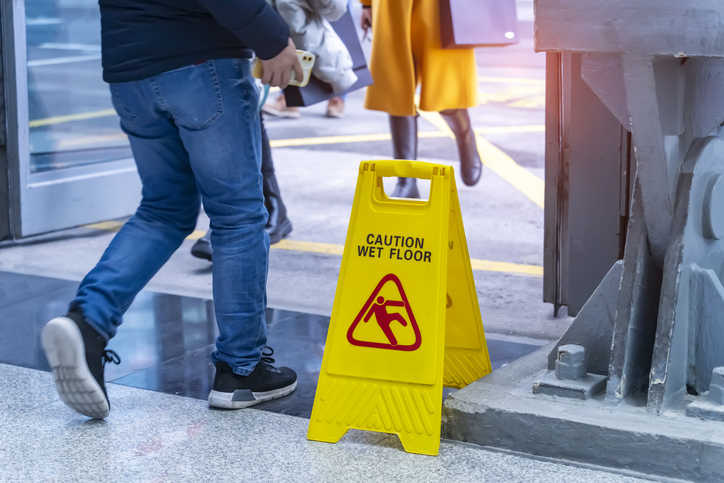
The afternoon was unremarkable. A woman in her mid-fifties was grocery shopping, cart half-full, maybe thinking about dinner. She turned down a refrigerated aisle and never saw the spill. One second she was upright. The next, she was on the floor with a fractured wrist, a torn rotator cuff, and a hospital bill that would take months to sort out.
Her story is more common than most people realize — and more legally complex than many victims expect.
Slip and fall accidents are among the most frequently reported personal injury incidents in the United States. According to the National Floor Safety Institute, falls account for over 8 million emergency room visits annually, making them the leading cause of ER admissions. Yet despite how common these injuries are, many victims either walk away without seeking compensation or find their claims dismissed because they didn’t understand the legal framework that governs these cases.
Understanding that framework — especially in a city like Houston — can mean the difference between recovering your losses and absorbing them alone.
What Makes a Slip and Fall a Legal Case
Not every fall creates a legal claim. The law doesn’t hold property owners responsible simply because someone was injured on their premises. What it does require is proof that the owner’s negligence contributed to the hazard that caused the fall.
Under premises liability law, property owners owe different levels of legal duty depending on the relationship between the owner and the person on the property. The Legal Information Institute at Cornell Law School distinguishes between invitees (customers, guests with permission), licensees (social guests), and trespassers — with invitees generally receiving the highest degree of protection. A grocery store customer, for instance, is an invitee, which means the store owes a duty to actively inspect for and correct dangerous conditions.
To build a viable claim, an injured party typically needs to demonstrate four things:
The property owner owed them a duty of care. The owner knew — or reasonably should have known — about the hazardous condition. The owner failed to address or warn about that hazard within a reasonable amount of time. That failure directly caused the injury and resulting damages.
The third element is often where these cases turn. A spill that occurred sixty seconds before someone fell may not support a claim if there was no reasonable opportunity for staff to discover and fix it. A spill that had been there for forty minutes — with no caution sign, no cleanup, and employees passing by — is a different story entirely.
Common Hazards Behind Slip and Fall Injuries
While the legal elements of these claims may seem abstract, the physical hazards that trigger them are usually straightforward. Wet floors without signage remain the most common culprit, particularly in grocery stores, restaurants, hospitals, and public buildings. But slip and fall injuries also arise from uneven pavement, broken or missing handrails, poor lighting in parking structures, cracked sidewalks outside businesses, loose rugs or mats, and freshly waxed floors left without warning.
The Centers for Disease Control and Prevention notes that falls are the leading cause of traumatic brain injury in the United States and that older adults face disproportionate risk — with falls causing roughly 36 million injuries annually across all age groups. This data matters not just as a public health benchmark, but because it underscores how serious these incidents can be. A fall that looks minor in the moment can produce spinal injuries, hip fractures, or head trauma that take months or years to fully manifest.
The Legal Landscape in Houston
Houston operates within Texas’s premises liability framework, which has some features that significantly affect how slip and fall claims play out in practice.
Texas follows a modified comparative fault rule under Texas Civil Practice & Remedies Code § 33.001. Under this standard, an injured party can still recover damages even if they were partially at fault — as long as their degree of fault doesn’t exceed 50 percent. However, any damages awarded are reduced proportionally by their assigned percentage of fault. A plaintiff found 20% responsible for their fall, for example, would receive 20% less in total compensation.
This rule matters because defense attorneys regularly argue that plaintiffs were distracted, wearing inappropriate footwear, or ignoring obvious hazards. The percentage of fault assigned to each party is often the most contested element in Houston slip and fall litigation.
Texas also imposes a two-year statute of limitations on personal injury claims under Texas Civil Practice & Remedies Code § 16.003. That means victims have two years from the date of injury to file a lawsuit. Missing that deadline almost universally bars recovery, regardless of how strong the underlying case might be. There are narrow exceptions — for minors, for instance, or when the injury was not immediately discoverable — but these require specific legal analysis and cannot be assumed.
Houston’s size adds another dimension. The city encompasses more than 665 square miles and includes a dense mix of commercial corridors, retail centers, medical complexes, mixed-use developments, and aging infrastructure. Premises liability cases in Houston routinely involve national retail chains, hotel operators, healthcare systems, apartment complexes, and municipal property — each with its own legal exposure, insurance infrastructure, and litigation strategy.
When a fall occurs on the property of a large commercial entity, victims are often dealing with experienced insurance adjusters and defense counsel almost immediately. Having a knowledgeable local attorney in your corner early is not a luxury — it’s often what determines whether a claim survives initial contact with the defense.
If you’ve been injured in a slip and fall accident in the Houston area, Contact The Law Offices of Colby Lewis to understand your rights under Texas law and evaluate whether you have a viable claim.
What to Do Immediately After a Slip and Fall
How you respond in the hours and days immediately following a fall can significantly affect the strength of any subsequent claim. Several steps matter most.
Report the incident. Notify the property owner, manager, or supervisor before leaving. Ask that an incident report be filed and request a copy. This creates a contemporaneous record that the fall occurred and documents the owner’s initial awareness.
Photograph the scene. If you’re physically able, photograph the hazard, the surrounding area, any warning signs (or the absence of them), and your injuries. Surveillance footage, which could capture the incident and the timeline leading up to it, is often overwritten within days. Your own documentation may be the only record that the condition existed as you describe it.
Seek medical attention promptly. This is important both for your health and for your legal case. Insurance companies routinely argue that a gap in medical treatment indicates the injury wasn’t serious. A medical record generated close in time to the fall ties your injuries directly to the incident.
Preserve your clothing and footwear. Defense teams sometimes argue that a plaintiff’s shoes contributed to their fall. Don’t discard anything you were wearing. Bag and store it.
Avoid giving recorded statements. Insurance adjusters may contact you quickly and ask for a recorded account of what happened. You are not obligated to provide one before speaking with an attorney, and early statements made without legal guidance have a way of being used against claimants later.
What Damages Are Available in a Texas Slip and Fall Case
Victims who establish liability in a slip and fall case may be entitled to a range of damages. Economic damages cover concrete, calculable losses — medical bills (past and future), lost wages, reduced earning capacity, physical therapy, assistive devices, and home modification costs if a disability results. Non-economic damages address what’s harder to quantify: pain and suffering, emotional distress, loss of enjoyment of life, and loss of consortium for spouses.
In cases involving particularly egregious conduct — a business, for instance, that was aware of a hazardous condition for an extended period and took no steps to address it — Texas Civil Practice & Remedies Code Chapter 41 allows for exemplary (punitive) damages in some circumstances, though these are subject to statutory caps.
The value of any individual case depends heavily on the severity of the injury, the clarity of liability, the insurance coverage available, and the jurisdiction. There is no universal formula. What a case is worth requires honest analysis from an attorney who understands both the legal framework and the local litigation environment.
Why Legal Representation Matters in Houston Specifically
Houston’s civil courts are busy, and its defense bar is sophisticated. When a large retailer, hotel chain, or commercial landlord faces a slip and fall claim, they bring institutional experience and claims management infrastructure to bear immediately. Adjusters are trained to minimize payouts. Defense attorneys are skilled at exploiting the comparative fault rules to shift blame onto the victim.
For injured Houstonians, that institutional disparity is real — and it makes experienced legal representation especially important. A premises liability attorney can conduct an independent investigation while evidence is still available, identify all potentially liable parties (which sometimes includes contractors, maintenance companies, or property management firms beyond the obvious property owner), retain expert witnesses on causation and damages, and negotiate from a position of strength when settlement discussions begin.
The window for preserving evidence is often short. Security footage disappears. Maintenance logs get updated. Witnesses forget. Acting quickly — and with proper legal guidance — is not just advisable; it’s often what preserves the case itself.
If you or a member of your family has suffered an injury due to a hazardous condition on someone else’s property in the Houston area, don’t assume the process will be straightforward. Contact The Law Offices of Colby Lewis to speak with an attorney who understands Texas premises liability law and can help you assess your options before the clock runs out.
What Most People Get Wrong About These Cases
The most persistent misconception about slip and fall claims is that they’re easy. They’re not.
Property owners and their insurers push back hard on virtually every element of a claim. They dispute whether they had notice of the hazard. They argue the hazard was open and obvious — meaning a reasonable person would have seen it and avoided it. They challenge the severity of the injury and its connection to the fall. They scrutinize everything from the plaintiff’s medical history to their phone records on the day of the incident.
The American Bar Association has noted the complexity of premises liability doctrine, particularly as commercial properties increasingly deploy surveillance systems, digital maintenance logs, and automated inspection protocols that can either support or undercut a plaintiff’s narrative depending on the specific facts.
What makes a case succeed, usually, is not the visceral drama of a bad fall — it’s the evidence. The maintenance log that shows the spill was reported forty minutes before the injury. The video footage that contradicts the store manager’s statement. The expert testimony that establishes the floor coating was applied incorrectly. The medical record that documents a previously healthy person now managing chronic pain.
These cases are built methodically, and they are won through preparation.
Falls happen in an instant. The legal process that follows can take months or longer. But for victims left with real injuries, mounting bills, and time away from work, getting that process right matters enormously.
The first step is understanding what the law actually requires — and finding a legal team that knows how to deliver it.