The moment a serious accident happens, everything changes. There’s the immediate pain, the confusion, the ambulance ride — and then, eventually, the harder work of proving to an insurance company or a jury exactly how much that moment cost you.
Medical records matter. Eyewitness testimony matters. But both have well-known limitations. Doctors document diagnoses, not daily suffering. Witnesses forget details, contradict each other, and fade under cross-examination. What’s harder to challenge is data — specifically, the continuous physiological record that millions of people are quietly generating every day from the devices on their wrists.
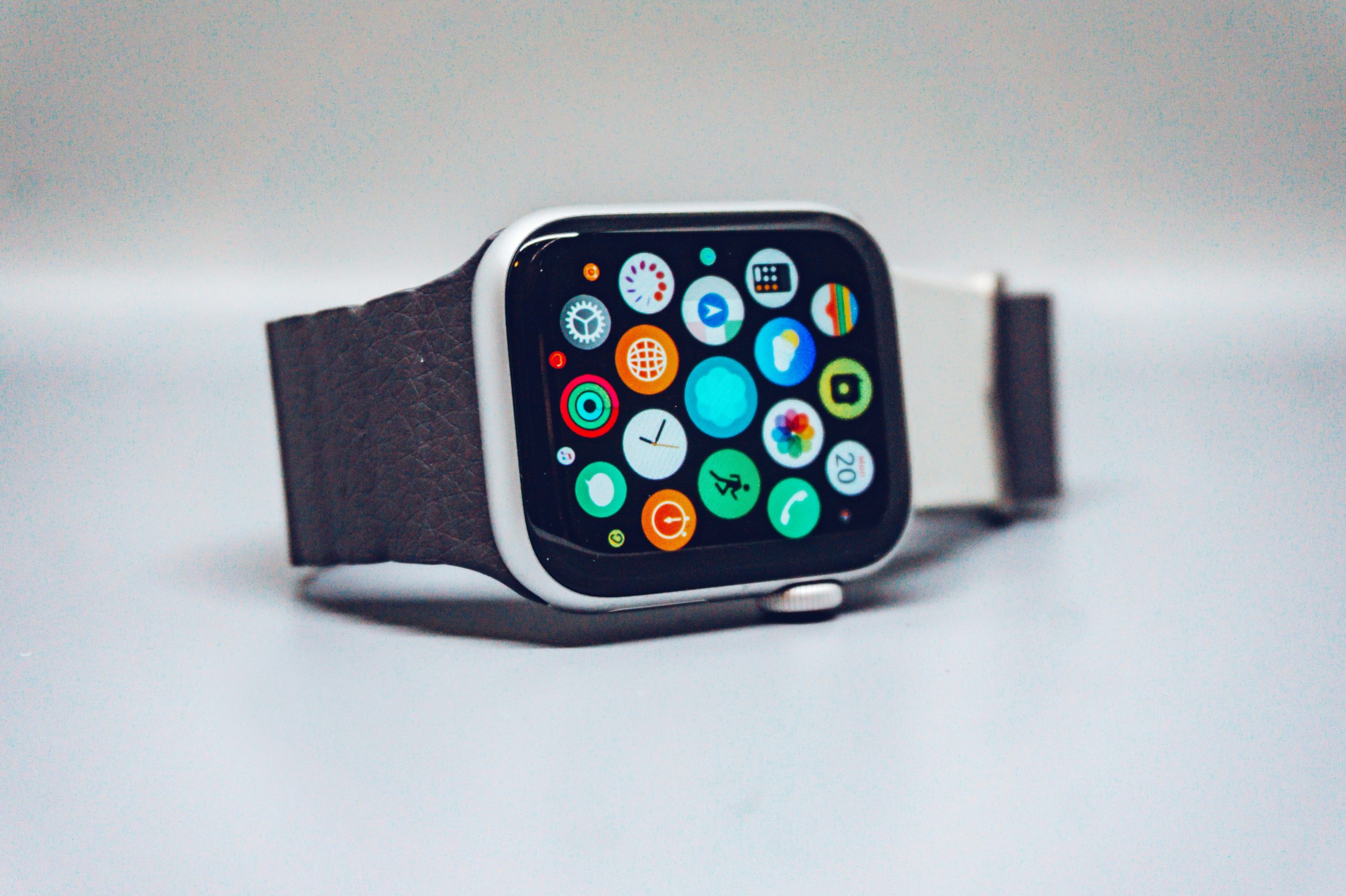
Wearable technology is reshaping how personal injury claims are built and contested. Smartwatches and fitness trackers that most people wear for step counts and sleep tracking are emerging as a meaningful category of evidence in civil litigation — and understanding how they work in this context matters whether you’ve been injured or simply want to know where the law is heading.
Key Takeaways
- Wearable devices record baseline health data that can demonstrate measurable changes in physical function after an injury.
- Heart rate variability, step counts, and sleep metrics can corroborate — or contradict — subjective claims about pain and limitations.
- GPS data from wearables can help reconstruct the circumstances surrounding an accident.
- Deleting or resetting a wearable device after an incident can trigger severe legal consequences under spoliation doctrine.
- Data must be preserved immediately, with a documented chain of custody, to be admissible and persuasive in court.
The Evidence Gap That Wearables Can Help Fill
Personal injury cases often turn on a single, difficult question: how has this person’s life actually changed?
That question is harder to answer than it sounds. A treating physician can diagnose a herniated disc or a traumatic brain injury, but what they typically can’t document is that you used to walk four miles a day and now struggle to get to the mailbox. They can prescribe sleep medication, but they can’t show a jury the forty-seven times you were awake between midnight and six a.m. in the months after the crash. Those details — the texture of how an injury reshapes ordinary life — have traditionally relied on testimony alone.
Testimony is easy to attack. A defense attorney’s job is to suggest that a plaintiff is exaggerating, malingering, or motivated by financial gain. Juries are not always equipped to sort out competing claims about someone’s pain levels. The result is a persistent credibility problem for injured plaintiffs, even when their injuries are genuine.
Wearable data doesn’t eliminate that problem, but it changes its shape. A National Institutes of Health analysis of consumer-grade biometric sensors found that devices like the Apple Watch and Fitbit can reliably track clinically relevant metrics — including heart rate variability (HRV), activity levels, and sleep architecture — with enough accuracy to be meaningful in medical contexts. When a plaintiff’s wearable shows a sustained decline in physical activity beginning the day after a documented accident, that timeline becomes very difficult for a defense team to dismiss.
What Biometric Data Actually Shows — and Why It Matters in Court
Heart Rate Variability as a Pain Marker
Heart rate variability measures the fluctuation between successive heartbeats. It sounds like a narrow metric, but HRV is one of the more sensitive indicators of how the autonomic nervous system is functioning — and chronic pain reliably disrupts it.
When the body is under sustained physical stress, the sympathetic nervous system stays elevated. That suppresses HRV. A wearable that records a person’s baseline HRV before an accident and then shows a prolonged drop after it provides a physiological footprint of distress that can accompany and support a physician’s clinical findings. It’s not a substitute for a diagnosis. But when a doctor testifies that a patient is experiencing chronic pain and that same patient’s wearable data reflects a corresponding shift in autonomic function, the two records reinforce each other in ways that are harder for a defense expert to rebut.
Step Count and Daily Activity
The before-and-after comparison is where activity data becomes most useful. Step count history, distance traveled, floors climbed, active minutes per day — these metrics provide a granular record of what someone’s physical life looked like prior to an injury. A person who averaged twelve thousand steps a day for two years and then abruptly dropped to under two thousand following a motor vehicle accident has a documented, timestamped record of physical decline that no defense expert created.
This kind of data validates claims that might otherwise come across as vague. “I can’t do the things I used to do” is something any plaintiff can say. Showing a jury a two-year activity graph with a hard inflection point at the date of the accident is something different entirely.
Sleep Disruption as Documented Suffering
Chronic pain reliably disrupts sleep. Disrupted sleep worsens pain. It’s a cycle well-established in the medical literature, and it’s something that wearables are well-positioned to document. Devices that track sleep stages, awake periods, and restless minutes generate exactly the kind of data that translates an invisible complaint — “I haven’t slept normally since the accident” — into a verifiable record.
The American Academy of Sleep Medicine recognizes sleep disruption as both a consequence and a driver of chronic pain conditions, and sleep-related impairment increasingly appears as a component of damages claims in serious injury cases. Wearable data offers a way to substantiate those claims with something more durable than self-report.
GPS Data and Accident Reconstruction
Beyond physiological metrics, the location-tracking capabilities built into most modern wearables have their own evidentiary value.
In cases involving pedestrian accidents, cycling incidents, or disputes over where and how a collision occurred, GPS logs can reconstruct a person’s path and pace in the moments leading up to impact. Did a pedestrian step suddenly into traffic, or were they already in the crosswalk when the light changed? How fast was a cyclist traveling? Was a person jogging or walking when a vehicle struck them? These are questions that often come down to competing narratives — and GPS records can anchor one of those narratives in objective data.
The National Institute of Justice has noted that digital evidence, handled correctly, carries significant weight in civil and criminal proceedings. The key phrase is “handled correctly.” GPS data from a wearable can reconstruct events precisely — but only if it’s preserved before the device syncs over it, the cloud backup expires, or the device is replaced.
The Spoliation Problem: Why Preservation Is Not Optional
This is where many injured people make a serious legal mistake, usually without realizing it.
Wearable devices and their associated apps are not built for litigation. They’re built for convenience. That means storage is routinely optimized, older data is overwritten to conserve space, and cloud backups can expire without any notification to the user. A person who waits several months to think about their smartwatch data may find that the most critical window — the weeks immediately before and after the accident — is already gone.
Worse, there is a legal doctrine that actively punishes the failure to preserve relevant evidence. Spoliation of evidence refers to the destruction — whether intentional or negligent — of material that a party knows or should know is relevant to pending or reasonably anticipated litigation. Federal courts and most state courts take spoliation seriously. If a plaintiff is found to have deleted wearable data, reset a device, or allowed a backup to expire after an accident that led to a legal claim, the opposing party can ask the court to instruct the jury that the missing data was probably harmful to the plaintiff’s case. That inference can be devastating.
The duty to preserve electronically stored information is well-established under the Federal Rules of Civil Procedure, and state courts follow analogous principles. The practical steps required are not complicated, but they have to happen quickly:
- Disable any automatic data deletion or overwrite settings on the device and its associated app.
- Export and save a complete copy of all health and fitness history to a secure, backed-up location.
- Photograph the device itself — make, model, serial number — along with screenshots showing sync history and data timestamps.
- Document the chain of custody: who has access to the device, when it was last synced, and what steps were taken to preserve the data.
An attorney should be involved in this process as early as possible. Proper chain-of-custody documentation, handled correctly from the start, can make the difference between data that is persuasive at trial and data that a defense team successfully challenges as unreliable or incomplete.
The Flip Side: When Wearable Data Works Against You
None of this is one-sided. The same data that can support a plaintiff’s claim can just as easily undermine it.
Defense attorneys have become increasingly sophisticated about seeking access to wearable data through discovery. If a plaintiff claims a leg injury prevents them from engaging in physical activity, and their Garmin shows three five-mile runs in the two months after the accident, that data will surface. If someone claims disabling back pain and their Apple Health record shows consistent activity levels, the defense will use it.
This is worth understanding clearly: wearable data, once it exists, is potentially discoverable. Attempting to hide it, delete it, or provide a sanitized version creates legal exposure that far exceeds whatever strategic inconvenience honest disclosure might create. The right approach is to understand what your data actually shows — before the other side finds out — and to work with an attorney to contextualize it accurately.
How Attorneys Are Using This Evidence in Practice
The use of wearable data in litigation is still developing, but it’s no longer novel. Attorneys in serious personal injury cases now routinely ask clients about wearable devices at the first consultation. Courts have addressed admissibility questions around biometric data in multiple jurisdictions. And insurers are paying attention — both to data that supports claims and to opportunities to challenge claims that don’t hold up under quantitative scrutiny.
For anyone involved in a significant personal injury case — whether a motor vehicle accident, a workplace injury, a slip and fall, or a product liability claim — the question of what data exists and how to handle it has become a standard part of case evaluation. Personal injury attorneys in Minneapolis, MN are increasingly factoring digital evidence, including wearable data, into their case strategies alongside medical records and eyewitness accounts.
The evidentiary potential here is real. So is the risk of mishandling it.
What to Do If You’re Injured and Own a Wearable Device
The steps below are not legal advice — every case turns on its specific facts. But they represent the basic practical guidance that most attorneys will walk you through in an initial consultation.
- Don’t reset or replace your device. Even if the device was damaged in the accident, preserve it. The data stored in the associated app may still be recoverable.
- Turn off auto-delete settings immediately. Many fitness apps have data retention limits that delete older records automatically. Disable these in the app settings as soon as possible.
- Export everything. Most major platforms — Apple Health, Google Fit, Garmin Connect, Fitbit — allow you to export your full data history. Do it now. Save it to multiple secure locations.
- Note any device syncing that occurred after the accident. Syncing can overwrite data. Document when the last sync before the accident occurred and what happened to the device afterward.
- Consult an attorney before speaking with insurance adjusters. This applies regardless of wearable data. What you say in early conversations with opposing insurers has a way of coming back up.
The window for preserving this evidence is narrow. Unlike medical records, which healthcare providers are required to retain for years, wearable data is held to no such standard. Once it’s gone, it’s gone.
Frequently Asked Questions About Wearable Data in Personal Injury Cases
Can the opposing party demand access to my wearable data during litigation?
Yes. In civil litigation, both parties have broad rights to obtain relevant evidence through discovery. If your wearable data is reasonably likely to bear on your injuries, your physical limitations, or the circumstances of the accident, the defense can request it — and courts have generally been willing to order production.
What if my wearable data doesn’t show what I expect it to show?
Work with your attorney to understand what the data actually reflects before it becomes an issue in litigation. Data that seems inconsistent with your claims may have innocent explanations — a period of forced activity due to work obligations, days when you weren’t wearing the device, or metrics that need medical context to interpret accurately. The key is addressing it proactively.
Does pre-accident data matter if I didn’t start wearing the device until after the injury?
Post-accident data still has value. It establishes a current baseline, documents your recovery trajectory, and can support medical testimony about the ongoing nature of your limitations. The absence of pre-accident data weakens the before-and-after comparison, but it doesn’t eliminate the evidentiary value of what you do have.
Is wearable data admissible in court?
Generally yes, though it requires proper authentication and chain-of-custody documentation. Courts in multiple jurisdictions have addressed the admissibility of biometric data from consumer devices. The technical standards continue to evolve, and an expert witness is often needed to contextualize the data for a jury.
Can I get in trouble for deleting my wearable data after an accident?
Yes — potentially serious trouble. Deleting data relevant to anticipated or pending litigation can constitute spoliation of evidence, which can result in sanctions, adverse jury instructions, or other remedies that significantly harm your case. Preserve everything and consult an attorney before taking any action with your device.
What if I wear multiple devices — a watch, a ring, a continuous glucose monitor?
Each device may generate independently useful data. A smart ring like an Oura device records different metrics than an Apple Watch; a CGM captures data that could reflect stress or pain responses affecting blood glucose regulation. Preserve data from every device you wear. Your attorney can assess what’s relevant.
Do insurance companies actually take smartwatch data seriously during settlement negotiations?
Increasingly, yes. Insurers are becoming more sophisticated about biometric evidence — and that cuts both ways. Strong wearable data can add leverage during settlement discussions. Inconsistent data creates exposure. Either way, it’s something that experienced adjusters and defense counsel are paying attention to.
How soon after an accident should I think about preserving wearable data?
Immediately. Data overwrite cycles can begin within days or weeks, depending on the platform and your settings. If you were injured and own any wearable device, preserving that data should happen the same day you think about preserving anything else — right alongside photographs of the scene and your medical records.
Technology rarely changes the underlying principles of personal injury law. The burden of proof stays the same. The elements of negligence stay the same. What changes is the quality and granularity of evidence available to meet that burden — and for anyone serious about building a thorough claim, wearable data has become too significant to ignore.
The injury happened. The question is whether you can prove exactly how much it changed your life. A device you’ve been wearing for years may already have part of the answer.